
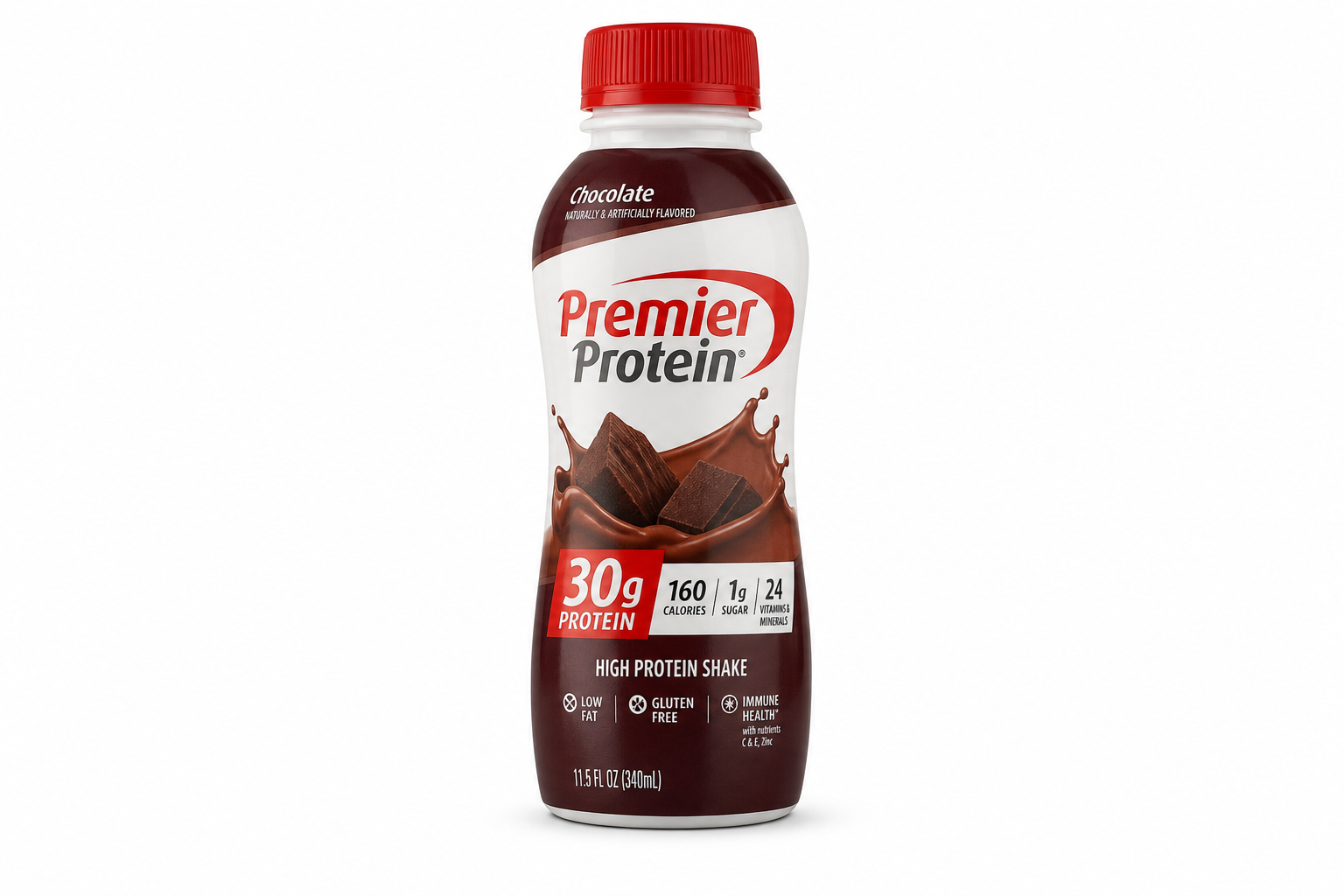
Premier Protein dominates Costco shelves with a bold claim: 30g of protein per bottle. At Costco bulk prices, gym-goers and busy professionals stock up by the case. But Premier Protein isn't an indie nutrition brand — it's made by BellRing Brands (NYSE: BRBR), a publicly traded company spun off from Post Holdings with a market cap reflecting massive scale. This is Wall Street's protein shake, optimized for shareholder returns. We looked past the protein headline to see what else you're drinking.
What Is Premier Protein?
Premier Protein is manufactured by BellRing Brands, Inc. (NYSE: BRBR), a publicly traded company headquartered in St. Louis, Missouri. BellRing was spun off from Post Holdings — the cereal company — in 2019 as a standalone nutrition company focused on "convenient, ready-to-drink protein products."
The corporate structure matters. As a NYSE-listed company, BellRing operates under quarterly earnings pressure. Every ingredient decision, every formulation choice, every sourcing decision is made with Wall Street analysts and shareholder returns in mind. This doesn't automatically mean bad products — but it does mean the incentive structure prioritizes cost optimization and margin preservation over ingredient innovation.
Premier Protein's strategy is straightforward: lead with the biggest protein number in the RTD category (30g), price aggressively in bulk warehouse channels (Costco, Sam's Club, BJ's), and let the protein count do the selling. It's nutrition as a commodity play.
Nutrition Profile: The Full Breakdown
Macronutrients
Each serving (one 11.5 fl oz bottle) delivers:
- Calories: 160 kcal
- Total Fat: 3g (4% DV) — includes sunflower oil
- Total Carbohydrates: 5g (2% DV)
- Dietary Fiber: 1g (4% DV)
- Total Sugars: 1g — sweetened with sucralose and acesulfame-K
- Protein: 30g (60% DV) — milk protein concentrate + calcium caseinate
- Sodium: 230mg (10% DV)
The protein-to-calorie ratio is the headline stat, and it's genuinely impressive: 30 grams of protein in just 160 calories. That's 75% of calories from protein — nearly unmatched in the RTD category. For pure protein delivery per calorie, Premier Protein wins on paper.
But protein quantity and protein quality are different conversations. And looking past the "30g" on the label reveals a more complicated picture.
Micronutrients — Afterthought-Level
Premier Protein includes vitamins and minerals, but they're positioned as a bonus rather than a core feature:
- Vitamin D: Cholecalciferol (D3) — one of the few acceptable forms used. Credit where due.
- Vitamin A: Retinyl Palmitate — synthetic
- All B vitamins: Synthetic forms throughout
- Calcium: 30% DV — largely from the calcium caseinate protein source, not from added fortification
- Iron: 15% DV — basic form
- Minerals: Basic oxide and sulfate forms throughout
Premier Protein is marketed primarily as a protein source, so the vitamin stack gets less scrutiny than meal replacement competitors. But for people using it as a daily shake (which many do), the all-synthetic, budget-grade micronutrient profile matters.
Ingredient Deep Dive
Protein — Conventional Dairy, No Sourcing Transparency
The protein comes from two sources:
- Milk Protein Concentrate (MPC): Contains both whey and casein in natural milk ratios. This provides a blend of fast-absorbing (whey) and slow-absorbing (casein) protein, which is actually beneficial for sustained amino acid delivery.
- Calcium Caseinate: A processed form of casein protein. It's effective for protein delivery but is more processed than whole milk protein.
The combined 30g protein per serving is real — there's no amino spiking or taurine padding inflating the number. The protein itself is functional and bioavailable (PDCAAS ~1.0 for dairy protein).
However, there's zero transparency about sourcing. No grass-fed certification, no A2 designation, no information about farm practices. For a NYSE-traded company with massive volume requirements, the dairy almost certainly comes from large-scale conventional operations. This means potential exposure to rBGH/rBST hormones and prophylactic antibiotics — standard practice in industrial dairy.
Sunflower Oil — The Seed Oil Issue
Premier Protein contains sunflower oil. While the total fat is only 3g (so the seed oil quantity is small), it's still a seed oil in a product consumed daily by millions of people. The cumulative omega-6 load from daily sunflower oil intake, even in small amounts, is worth considering — especially when combined with other omega-6 sources in a typical American diet.
For a company with BellRing's resources, alternatives exist: coconut oil, MCT oil, or even palm oil would provide different fatty acid profiles. Sunflower oil is the cost-optimized choice.
Artificial Sweeteners — The Usual Suspects
Both sucralose and acesulfame potassium (Ace-K) are used to deliver sweetness at only 1g sugar. This dual-sweetener approach is standard in mass-market protein products:
- Sucralose: Provides the primary sweetness. Post-2023 research has raised questions about gut microbiome effects, DNA genotoxicity of metabolites, and insulin signaling disruption.
- Acesulfame-K: Enhances sweetness perception and provides a quicker sweet onset than sucralose alone. Less studied than sucralose, with preliminary concerns about metabolic effects.
For a product many people drink daily for years, the long-term implications of daily artificial sweetener consumption are increasingly relevant as research accumulates.
Carrageenan and Cellulose Gel
Some Premier Protein varieties contain carrageenan (controversial thickener linked to GI inflammation in some studies) and cellulose gel (processed plant fiber used as a texturizer). Both are common in mass-market RTD products and both are ingredients that clean-label brands proactively remove.
Taste, Texture, and Mixability
Premier Protein's taste is one of its genuine strengths. The Chocolate flavor is sweet and smooth — it tastes more like a milkshake than a protein shake. The Vanilla is creamy and versatile for smoothies. The Café Latte flavor is popular for mixing with coffee.
Texture is smooth and drinkable — the industrial processing creates a consistent, pleasant mouthfeel that's better than most competitors. No chalkiness, no grittiness, no protein aftertaste. This is where BellRing's scale and food science expertise genuinely shows.
The taste quality is largely why Premier Protein has such strong repeat purchase rates. People drink it because it tastes good and delivers protein. The ingredient quality concerns happen behind the label, not on the tongue.
Who Is Premier Protein For?
- People who need affordable, high-protein nutrition and prioritize protein quantity over ingredient quality
- Gym-goers looking for convenient post-workout protein at bulk pricing
- Busy professionals who want a grab-and-go breakfast with 30g protein
- Costco shoppers who value bulk pricing and warehouse convenience
- Those who prioritize taste above ingredient sourcing concerns
Who Should Skip Premier Protein?
- Anyone who cares about dairy sourcing (no grass-fed, no transparency)
- People avoiding seed oils — sunflower oil is present
- Those concerned about artificial sweetener research — both sucralose and Ace-K are used
- Consumers who want clean-label nutrition without carrageenan and cellulose gel
- Anyone looking for complete nutrition — this is a protein supplement, not a multivitamin
Legal and Safety Record
Rhee v. BellRing Brands
Status: Active class-action lawsuit
An active lawsuit alleging misleading marketing claims about protein quality and health benefits. This is significant because it directly challenges the core marketing proposition of the product. The case is ongoing as of this review.
NYSE Public Company Dynamics
As a publicly traded company, BellRing Brands files quarterly 10-Q and annual 10-K reports with the SEC. These filings reveal that Premier Protein's gross margins are in the 35-40% range — meaning the company retains roughly $0.70-$0.80 per dollar of revenue after ingredient and manufacturing costs. This margin pressure creates constant incentives to find cheaper ingredients, suppliers, and formulations.
BellRing's investor presentations emphasize "innovation in convenient protein formats" and "distribution expansion." Ingredient quality improvement is not a featured strategic initiative in any recent investor communication we reviewed.
Strengths
- 30g protein per serving — highest in the RTD category
- Only 160 calories — exceptional protein-to-calorie ratio
- Widely available at Costco, Amazon, and every major retailer
- Affordable in bulk (Costco 18-packs offer significant per-unit savings)
- Convenient ready-to-drink format — no mixing required
- Genuinely good taste across flavor range
- Vitamin D3 form is acceptable (one of few quality micronutrient choices)
- No amino acid spiking — the 30g protein claim is legitimate
Limitations
- Contains sunflower oil (seed oil)
- Sucralose + acesulfame potassium — two controversial artificial sweeteners
- All synthetic vitamin forms across the board
- Active class-action lawsuit (Rhee v. BellRing Brands)
- Milk protein from conventional dairy — no grass-fed, no sourcing transparency
- Carrageenan in some varieties — controversial thickener
- NYSE-listed company with quarterly earnings pressure on formulation decisions
- Only 1g fiber — negligible digestive benefit
- Not a meal replacement at 160 calories — it's a protein supplement
Value Assessment
On a protein-per-dollar basis, Premier Protein at Costco pricing is hard to beat. If your single criterion is "most grams of protein for the least money in a ready-to-drink format," Premier Protein wins. Full stop.
On a total-nutrition-per-dollar basis, the equation changes. You're getting 30g of conventional dairy protein, a seed oil, two artificial sweeteners, synthetic vitamins, and processing aids. Huel provides equal protein with vastly superior vitamin forms and whole-food carbs at $2.12/serving (powder format). The value comparison shifts dramatically when ingredient quality enters the equation.
Final Verdict
Premier Protein is optimized for one metric: grams of protein per dollar. On that narrow measure, it delivers decisively. 30g of protein in 160 calories at Costco bulk pricing is mathematically hard to beat in the RTD category.
But nutrition isn't a single-variable equation. The protein comes from conventional dairy with zero sourcing transparency. The sweetness comes from two artificial sweeteners with accumulating research concerns. The fat includes sunflower oil. The vitamins are all budget-grade synthetic. An active class-action lawsuit challenges the marketing claims. And the publicly traded parent company's incentive structure prioritizes margin preservation over ingredient improvement.
If you need cheap, convenient protein and literally nothing else matters, Premier Protein serves that purpose effectively. If you care about what else is in your daily protein source — the oils, the sweeteners, the dairy sourcing, the vitamins, the processing aids — there's a significant gap between the headline "30g protein" and the full ingredient reality.
The label tells you how much protein is inside. It doesn't tell you what else came along for the ride.
Score Breakdown
- Nutrition: 5.5/10
- Protein Quality: 5.5/10
- Vitamin Quality: 3.0/10
- Transparency: 4.0/10
- Value: 6.5/10
- Safety & Legal: 4.5/10
- Ingredient Purity: 3.0/10
Overall Score: 4.8/10
Frequently Asked Questions
Is Premier Protein healthy?
It delivers 30g protein in 160 calories, which is impressive for protein supplementation. But it also contains sunflower oil, artificial sweeteners (sucralose and acesulfame-K), conventional dairy protein with no sourcing transparency, and all-synthetic vitamins. "High protein" and "healthy" aren't automatically the same thing.
Does Premier Protein have a lawsuit?
Yes — Rhee v. BellRing Brands is an active class-action lawsuit alleging misleading marketing claims about protein quality and health benefits. The case directly challenges Premier Protein's core marketing proposition.
Why is Premier Protein so cheap at Costco?
BellRing Brands (NYSE: BRBR) is a publicly traded company with massive manufacturing scale. They use conventional dairy, synthetic vitamins, seed oil, and artificial sweeteners — all cost-optimized ingredients. The bulk Costco pricing reflects volume discounts on already-cheap ingredients. The savings come from ingredient quality tradeoffs, not operational innovation.
Does Premier Protein contain seed oils?
Yes — sunflower oil is listed in the ingredients. While the total amount is small (3g total fat), sunflower oil is a seed oil high in omega-6 fatty acids. For daily consumption, the cumulative omega-6 intake adds up.
Is 30g protein per serving real?
Yes — Premier Protein does not appear to use amino acid spiking (adding cheap amino acids like taurine or glycine to inflate the protein count). The 30g comes from genuine milk protein concentrate and calcium caseinate. The protein claim is legitimate.
Is Premier Protein good for building muscle?
The 30g of dairy protein provides adequate leucine and essential amino acids for muscle protein synthesis. Dairy protein (whey + casein blend) is effective for muscle building. However, the conventional sourcing and processing mean you're getting functional protein without the quality markers (grass-fed, cold-processed) that some athletes prefer.
About the Author: This review was written by a certified nutritionist with over 10 years of experience in holistic health and supplementation. We purchased this product independently and received no compensation for this review.
Explore More
📊 See the full rankings: Top Rated Meal Replacement Shakes 2026
📐 How We Score: Our 7-Dimension Methodology
⚖️ Compare Shakes Side-by-Side
📖 Related Reviews: 310 Nutrition Review (4.8/10) · Huel Review (7.2/10) · Shakeology Review (4.0/10)


