
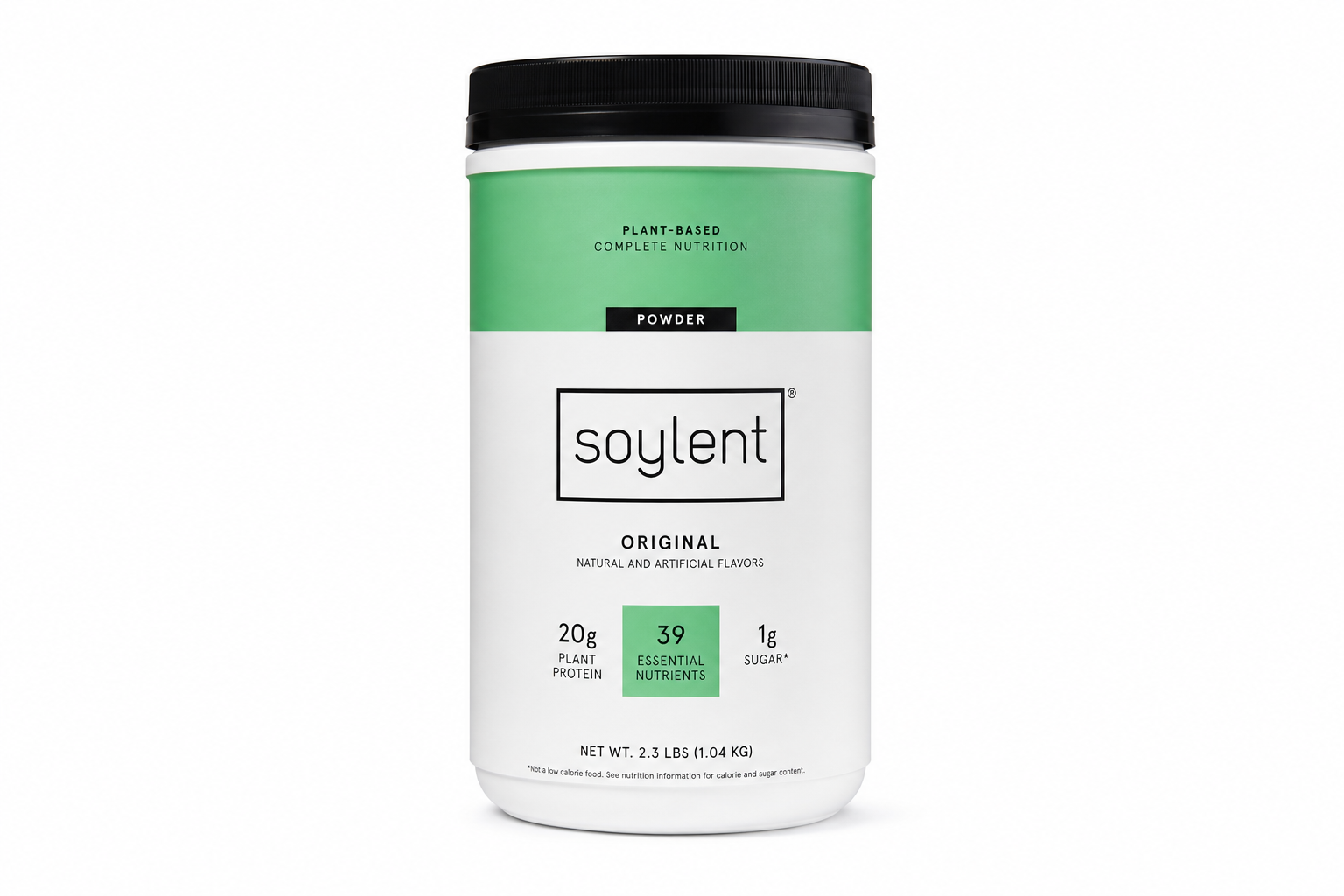
Born in a San Francisco apartment in 2013, Soylent was software engineer Rob Rhinehart's attempt to hack nutrition the way Silicon Valley hacks everything else. Named after a fictional dystopian food (yes, that movie), the brand survived VC drama, multiple reformulations, and a corporate acquisition. Over a decade later, we bought the current formula to see what's actually inside — and whether the "nutrition as code" approach actually delivers.
What Is Soylent?
Soylent is a meal replacement brand founded by Rob Rhinehart in 2013 as a Kickstarter project in San Francisco. Rhinehart, a software engineer frustrated by the time and money spent on food, created what he called "the most efficient food possible." The concept went viral in tech circles, raised over $70 million in venture capital, and became a cultural phenomenon in Silicon Valley.
The brand has had a turbulent corporate history. After years of VC-backed growth, leadership changes, and product recalls, Soylent was acquired by Starco Brands in 2024. This is Soylent's third major corporate phase, and each transition has brought reformulations. The product comes in both ready-to-drink (RTD) bottles and powder form, with multiple flavors.
Soylent's positioning has always been utilitarian rather than aspirational: this isn't a wellness product, it's an engineering solution to the "problem" of eating. Whether that philosophy appeals to you says a lot about whether Soylent is right for you.
Nutrition Profile: The Full Breakdown
Macronutrients
Each serving of Soylent Powder delivers:
- Calories: 400 kcal — one of the highest in the category
- Total Fat: 21g (27% DV) — primarily from canola and sunflower oils
- Total Carbohydrates: 36g (13% DV) — including maltodextrin and isomaltulose
- Dietary Fiber: 3g (11% DV)
- Total Sugars: 9g
- Protein: 20g (40% DV) — soy protein isolate
- Sodium: 300mg (13% DV)
The 400-calorie serving is genuinely meal-replacement level — unlike many competitors that deliver 150-240 calories and call it a "meal." If you're actually replacing a meal, Soylent provides enough energy to sustain you. The 20g protein is adequate though not exceptional.
However, where those calories come from raises serious red flags.
Micronutrients — All Synthetic, All Budget
Every vitamin and mineral form in Soylent is synthetic:
- Vitamin B12: Cyanocobalamin — cheapest synthetic form
- Folate: Folic acid — problematic for 40% of the population with MTHFR variants
- Vitamin D: Ergocalciferol (D2) — the less effective plant-derived form. Most modern products use D3 (cholecalciferol) because it raises serum levels more effectively. Soylent's use of D2 is unusual and arguably outdated.
- Vitamin E: dl-Alpha Tocopheryl Acetate — the synthetic racemic form, which includes mirror-image molecules less useful to your body
- All minerals: Basic oxide and sulfate forms with limited bioavailability
To Soylent's credit, the brand has never claimed to use premium vitamin sources. The pitch has always been about completeness and efficiency, not ingredient quality. But at $3.25 per serving, the all-synthetic approach is hard to justify when competitors offer methylated and chelated forms at similar or lower prices.
Ingredient Deep Dive
Protein — Soy Protein Isolate (Hexane Extraction Concerns)
Soylent uses soy protein isolate (SPI) as its sole protein source. SPI is the most processed form of soy protein, typically extracted using hexane — an industrial solvent derived from petroleum. While the FDA considers trace hexane residues in food "generally recognized as safe," Soylent has not confirmed whether their soy is mechanically or hexane-extracted.
The PDCAAS of soy protein isolate is technically high (0.91-1.0), meaning the protein itself is well-utilized by the body. However, SPI processing strips out isoflavones and other beneficial soy compounds that whole soy provides. You get the protein but lose the soy's natural benefits.
Additionally, soy protein isolate is one of the most common allergens, and there's ongoing debate about phytoestrogen exposure from concentrated soy sources — though current research suggests this is less concerning than previously feared for most adults.
Carbohydrates — Maltodextrin: Higher Glycemic Index Than Sugar
This is Soylent's biggest red flag. Maltodextrin is the primary carbohydrate source, and it has a glycemic index of 85-105 — higher than table sugar (GI: 65). It's cheap, it dissolves easily, and it spikes blood sugar rapidly.
For anyone concerned about metabolic health, insulin sensitivity, blood sugar management, or long-term diabetes risk, maltodextrin as a primary carb source is a significant concern. It's the ingredient equivalent of optimizing for cost and convenience at the direct expense of health.
Isomaltulose is also included — a slower-release sugar (GI: 32) that somewhat counterbalances the maltodextrin. But isomaltulose is still a processed sugar derivative, not a whole food carbohydrate. The net effect is a rapid initial blood sugar spike from the maltodextrin, partially modulated by the isomaltulose.
Fats — Two Seed Oils
Soylent contains both canola oil and sunflower oil — two industrial seed oils high in omega-6 fatty acids. The canola oil is labeled "high oleic" which means it has more monounsaturated fat (similar to olive oil) and is somewhat better than standard canola. However, the sunflower oil addition pushes the omega-6 content higher.
The seed oil debate remains contentious in nutrition science. What's less debatable: a nutrition product positioned as "optimal fuel" choosing two processed vegetable oils over alternatives like coconut oil, MCT oil, or even flaxseed oil (for omega-3s) is a cost-driven decision, not a health-driven one.
Together, the 21g of fat from these oils constitutes nearly half of Soylent's calories. You're essentially drinking a seed oil shake with protein and vitamins added.
Taste, Texture, and Mixability
Soylent's taste has been described as "aggressively neutral" — which is actually by design. Rhinehart's original vision was food as fuel, not food as experience. The Original flavor tastes vaguely like diluted pancake batter. The Chocolate and Café flavors are more palatable but still utilitarian.
The RTD bottles mix better than the powder (obviously — they're pre-mixed). The powder can be chalky if not blended well and benefits from refrigeration overnight. Texture is smoother than most plant-based shakes but still has a processed, engineered mouthfeel that reflects what it is.
Who Is Soylent For?
- Tech workers and busy professionals who genuinely want to skip meals and don't care about ingredient quality
- People whose alternative is fast food or skipping meals entirely
- Those who want a true 400-calorie meal replacement (not a 150-cal supplement)
- Budget-conscious consumers who prioritize convenience over ingredient sourcing
Who Should Skip Soylent?
- Anyone managing blood sugar or insulin sensitivity — maltodextrin (GI 85-105) is a deal-breaker
- People avoiding seed oils — Soylent contains two (canola + sunflower)
- Those with soy allergies or sensitivities
- Consumers who care about vitamin bioavailability — everything is synthetic
- Anyone looking for whole-food-based nutrition — Soylent is the opposite of that
Ownership and Corporate Stability
Soylent's corporate journey raises legitimate questions:
- 2013: Founded by Rob Rhinehart via Kickstarter
- 2014-2018: Raised $70M+ in VC funding from Andreessen Horowitz and others
- 2016: FDA warning letter related to product recalls (Soylent Bar) and labeling issues
- 2020: Leadership changes, Rob Rhinehart stepped back
- 2024: Acquired by Starco Brands
Each ownership change has brought reformulations. Formula consistency through corporate transitions is always a concern — what you're drinking today may not be what you're drinking in 18 months. The current Starco Brands ownership is a consumer products holding company, not a nutrition-focused organization.
Strengths
- Complete 400-calorie serving — genuinely meal-replacement level
- Convenient RTD format available — no mixing required
- Widely available on Amazon and in retail
- Transparent ingredient list — no proprietary blends hiding anything
- Good option for true meal skipping when the alternative is worse
- Reasonable price point for the calorie and macro delivery
Limitations
- Contains two seed oils — canola oil AND sunflower oil
- Maltodextrin as primary carb — glycemic index of 85-105 (higher than table sugar)
- Soy protein isolate — likely hexane-extracted, no sourcing transparency
- All synthetic vitamin forms across the board, including inferior D2
- Isomaltulose — processed sugar filler
- Multiple ownership changes affecting formula stability
- FDA warning letter history (2016)
- Only 3g fiber per serving — minimal digestive benefit
Value Assessment
At $3.25 per serving, Soylent delivers more calories (400) than most competitors, which makes it genuinely useful as a meal replacement. On a cost-per-calorie basis, it's competitive. On a cost-per-quality-ingredient basis, it's poor.
Huel delivers 400 calories at $2.12/serving with vastly superior vitamin forms and oat-based carbs instead of maltodextrin. The value comparison isn't close when ingredient quality is factored in.
Final Verdict
Soylent is what happens when you engineer nutrition for efficiency rather than quality. The 400-calorie serving is legitimately meal-replacement level — most competitors don't come close. The ingredient transparency is appreciated (no proprietary blends hiding anything).
But the foundation is deeply problematic: maltodextrin that spikes blood sugar faster than table sugar, two seed oils providing nearly half the calories, hexane-processed soy protein, and all-synthetic vitamins including the inferior D2 form. At $3.25 per serving, you're paying for convenience and calories, not quality.
If your only alternative is fast food or skipping meals, Soylent is the better choice. If you're choosing between meal replacement shakes and ingredient quality matters, Soylent falls short of competitors that deliver equal or more calories with significantly cleaner ingredients.
Score Breakdown
- Nutrition: 6.0/10
- Protein Quality: 5.0/10
- Vitamin Quality: 3.0/10
- Transparency: 7.0/10
- Value: 4.5/10
- Safety & Legal: 5.5/10
- Ingredient Purity: 3.5/10
Overall Score: 5.5/10
Frequently Asked Questions
Is Soylent healthy?
It depends on your definition. Soylent provides complete macronutrients and covers vitamin/mineral minimums — but does so using maltodextrin (glycemic index 85+), two seed oils, hexane-processed soy, and all-synthetic vitamins. It's nutritionally "complete" on paper but ingredient-quality-poor in practice.
Does Soylent contain seed oils?
Yes — both canola oil and sunflower oil. The canola is labeled "high oleic" which is marginally better, but both are industrial seed oils high in omega-6 fatty acids. Together they provide 21g of fat per serving — nearly half of Soylent's total calories.
Why does Soylent use maltodextrin?
Cost and mixability. Maltodextrin is cheap, dissolves easily, and provides quick energy. The tradeoff is a glycemic index of 85-105, which spikes blood sugar faster than table sugar (GI 65). For anyone managing insulin sensitivity, metabolic health, or weight, this is a significant concern.
Is Soylent good for weight loss?
At 400 calories per serving, it's higher than most competitors (150-240 cal). If you're replacing a 700-calorie fast food meal, it creates a deficit. But the maltodextrin-driven blood sugar spikes can trigger hunger cycles and insulin responses that undermine long-term calorie control.
Has Soylent been recalled?
Soylent received an FDA warning letter in 2016 related to the Soylent Bar product line (reports of customers getting sick). The bars were discontinued. The current powder and RTD formulas are different products that haven't had recalls, but the regulatory history is worth noting.
Who owns Soylent now?
Starco Brands acquired Soylent in 2024. Starco is a consumer products holding company, not a nutrition-focused organization. This is Soylent's third major corporate phase after the original founder era and the VC-backed growth period.
About the Author: This review was written by a certified nutritionist with over 10 years of experience in holistic health and supplementation. We purchased this product independently and received no compensation for this review.
Explore More
📊 See the full rankings: Top Rated Meal Replacement Shakes 2026
📐 How We Score: Our 7-Dimension Methodology
⚖️ Compare Shakes Side-by-Side
📖 Related Reviews: Huel Review (7.2/10) · Vega One Review (6.0/10) · 310 Nutrition Review (4.8/10)


